Chapter 2: It’s a Philly Thing
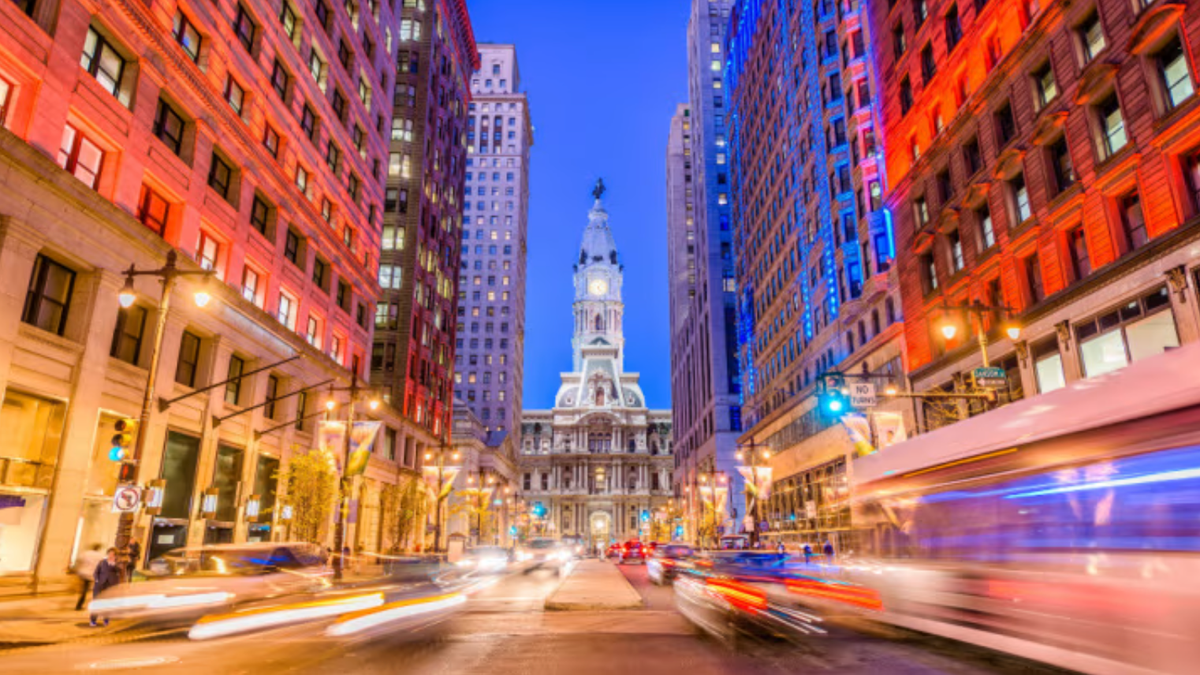
Cheesesteaks. Rocky. The Liberty Bell. That’s what most people think of when they hear the word ‘Philadelphia’. But there’s a darker side to ‘The Birthplace of the Nation’. In 2021, Billy Penn, a well-known local news team with an investigative bent, published an article about the more than 1,000 federal convictions the city has seen in the last 40 years, with the district averaging 250-300 per decade. A number that includes numerous city councilmembers, a District Attorney, and even a former state Senator. According to the same article, the possibility of being bugged or wiretapped has become practically banal for those in public office, prompting many to adopt a more cautious approach when conducting business in the shadows.
Nationwide, Philadelphia ranks only 10th most corrupt, based on federal corruption convictions over the last decade. But is this really an accurate assessment of the city of Brotherly Love? Or is it an indication of the culture itself? Center City, the heart of downtown and a popular tourist destination, is littered with signs, t-shirts, and other memorabilia that proudly proclaim ‘It’s a Philly Thing.’ This implied inscrutability is reinforced by locals who are quick to declare that they don’t care what others think of them. The ‘others’, of course, being any outsiders who can’t or won’t embrace and understand the city’s culture.
Of course, taking pride in one’s city isn’t something new. But Philadelphians aren’t proud; they’re immune to any and all criticism of their city, no matter how mild or obvious the criticism may be.
In 1903, journalist Lincoln Steffens branded Philadelphia ‘the most corrupt and the most contented” of America’s cities. That was more than a hundred years ago, back when the town was run by Republicans, a stronghold that persisted for 67 years until rampant corruption led to a Democratic wave. However, for those eager to label the city a victim of red and blue politics, it’s essential to note that corruption has been a part of Philadelphia since its founding by William Penn in 1682. But it would be incorrect to think of Philly as a city long-plagued by a mere one or two bad apples. A more accurate depiction would be to imagine a bunch of worms tied together into the shape of an apple. The apple is just an illusion, but the truth of the thing can only be realized upon closer inspection of the barrel’s contents.
So how did Philly get this way? Is it something in the water? And more importantly, is there any hope that the city will change after so many centuries? Like many things in life, the answer is complicated.
When William Penn, who has sat atop City Hall in the form of a 37-foot bronze statue since 1894, founded the city of Philadelphia, he established a leadership class that consisted almost exclusively of wealthy merchants. Seven years later, the Corporation of Philadelphia solidified both the power of this elite class and, subsequently, the priorities of its newest form of government. Despite its growing population, the city's government, led by Penn as its de facto mayor, neglected public welfare, health, and safety.
It wasn’t long before the merchant class exploited their newfound power by engaging friends and family in contracts, permits, and other lucrative business opportunities unavailable to the general population. Nonetheless, the city continued to grow and quickly became a key trade center due to its strategic location along the Delaware River. During this first decade, much of its wealth came from West Indian sugar cane plantations, which played a key role in the Triangle Trade with Africa and Europe. Immigrants from Germany and Northern Ireland flocked to the city in the 1720s and 30s as it became a hub for agricultural exports of grain, lumber, and flaxseed throughout the American colonies and abroad in Europe.
But it was the city’s promise of religious tolerance, laid down by Penn himself based on his own desire to escape the religious persecution he had experienced in Britain as a Quaker, that brought in the largest influx of new residents, including Mennonites, Pietists, Anglicans, Catholics, and Jews. While the Quaker ruling class maintained the status quo in the face of the city’s growing non-Quaker population, it faced threats from opposition groups, some of which were violent. Tensions came to a head during the Philadelphia Election Riot, which was sparked by well-founded claims from Anglicans that Quakers had a habit of blocking unfavorable votes during elections.
Petty crime and pickpocketing became widespread. The reputation of city government workers became so tarnished that fines were imposed to force elected officials to serve their terms, leading one man who had been elected mayor to flee the city entirely. Urban planning had yet to reach the colonies, and, like many other large cities, Philadelphia was filled with litter and animal excrement. Attempts to clean up the blight proved unsuccessful due to poor enforcement of litter laws.
Despite these setbacks, the city’s population continued to grow, and several well-known city buildings and institutions were erected by mid-century, including the first hospital in the colonies and the landmark Pennsylvania State House, which was later renamed Independence Hall. Schools, libraries, and theaters were also established during this period, many of which were the first of their kind in the nation. Benjamin Franklin, who had arrived in the 1720s, established the nation’s first firefighter union and post office, in addition to establishing the College of Philadelphia, which is known today as the University of Pennsylvania.
However, tensions with the British over taxation and tyranny continued to escalate throughout the colonies, eventually leading to the American Revolution in 1775, with Philadelphia at the forefront of the rebellion. Robert Morris, one of the Founding Fathers of the United States, summed up the importance of Philadelphia when he said “You will consider Philadelphia, from its centrical situation, the extent of its commerce, the number of its artificers, manufactures and other circumstances, to be to the United States what the heart is to the human body in circulating the blood.” In 1776, the Declaration of Independence was signed. And in 1783, when the war had ended, Philadelphia was chosen as the nation's temporary Capital, further solidifying it as the heart of the newly formed United States.
But just as quickly as Philadelphia had risen to prominence, cracks began to appear in its reputation. Later that very same year, hundreds of war veterans marched on the Pennsylvania statehouse in protest after the government refused to pay them their due wages for fighting in the war. Congress, lacking the funds to pay them, fled to Princeton, New Jersey, taking their staff and families with them, and never returned. New York City, a mere 90 miles to the north of Philadelphia, quickly replaced the city as the seat of Congress. By the turn of the century, the heart of American government had permanently relocated to D.C.
In the 1790s, a four-month-long yellow fever epidemic nearly devastated the city’s economy, prompting the departure of 20,000 residents. All while Philadelphia served as the temporary Capital of the newly formed United States. Despite having a population of 67,00 people, which made it the nation’s largest city at the time, as well as home to one of the busiest ports, Philadelphia’s status as a maritime hub took a direct hit during the Embargo Act of 1807 and the War of 1812. This economic and strategic setback enabled New York City to permanently seize both titles.
Manufacturing plants and metalworking factories sprang up around the city in response to the shortage of goods resulting from the cessation of trade with Britain. Canals, new roads, and railroads helped establish Philadelphia as the country's first industrial city. In 1835, the first signs of labor unions emerged when more than 20,000 workers went on strike in protest against hazardous working conditions. Widely regarded as the first general strike in America, the protest led to the establishment of the 10-hour workday and higher wages for workers. The First and Second Banks, the first U.S. Mint, and the Franklin Institute, among other key financial and cultural institutions, emerged in rapid succession. Immigrants from Ireland and Germany poured into the city in search of opportunities, resulting in the conversion of upper-class homes into tenements and boarding houses to accommodate the rapid increase in residents. Due to overcrowding and continually poor sanitation, bouts of malaria, smallpox, tuberculosis, and cholera were common.
By this time, violence and lawlessness, specifically that at the hands of volunteer firefighter gangs, were common. Violence against Irish, African-Americans, and Catholics was also an ongoing problem due to competition for jobs, as well as a general hatred of the ‘colored’ population, which many working-class whites believed had no right to freely live within the city. No thanks, in large part, to the city’s well-established Quaker and anti-slavery societies. Joseph Sturge, a well-known Philadelphia Quaker and abolitionist, once remarked: "...there is probably no city in the known world where dislike, amounting to the hatred of the coloured population, prevails more than in the city of brotherly love!"
However, vocalized pro-southern sentiments were significantly diminished when the American Civil War broke out in 1861, as Philadelphia played a crucial role in supporting the northern effort, including the treatment of wounded soldiers, the manufacture of ammunition, and even the production of uniforms and warships. By 1860, the city had grown from half a million inhabitants to 674,022, and it showed little sign of slowing. Just sixteen years later, Philadelphia had fewer than 250,000 residents, approximately 27 percent of whom were now foreign-born, mostly of German and Irish heritage. In the 1880s, immigrants from Italy and Eastern Europe began to arrive in large numbers. Likewise, as hundreds of thousands of newly freed African Americans began migrating north, Philadelphia became a popular destination for this group, making the city, for a time, the northern state with the largest such population. While poor immigrants settled in the city proper, the city’s wealthy headed for nearby suburbs, specifically those along the Philadelphia Main Line in the nearby west.
Now controlled by the Republican Party, which dominated post-war elections top to bottom, the city fell victim to corruption from within, as it had lost no time in seizing additional power via voter fraud and intimidation. The Gas Trust, the mechanism that supplied lighting to the city and its inhabitants, proved an effective tool for control, allowing the party to award its members, as well as any acquiescent cronies, lucrative contracts and other perks. But overall, the city continued to progress. Volunteer firefighters were replaced with paid, regulated fire departments. The police department was reformed to better serve the public’s interests, and education was removed from local governments' control. Temple University, Drexel University, and the Free Library were all founded during the late 19th century.
In 1876, the city hosted the nation’s first World’s Fair in honor of the country’s 100th year. Exhibits included Alexander Graham Bell’s telephone and the Corliss steam engine, which significantly increased factory productivity without relying on water power. By the time the fair ended in November of that year, more than nine million people had attended. Just a few years later, the city began construction on City Hall, which, as the tallest building in the town, would become the focal point of downtown. However, graft and mismanagement significantly delayed its completion, pushing it to 23 years.
Project delays aside, Philadelphia continued to solidify its status as an industrial powerhouse, leading the country in textiles, fine leather goods, and iron and steel, among other specialized industries. This diversification helped the city weather more than one economic downturn, most notably multiple bankruptcies of Reading Railroad, one of the first railroads in the United States. The collapse of the latter resulted in the company being taken over by New Yorkers. Yet another ding in the well-known battle for supremacy between the two cities.
But for all its success, word about Philadelphia’s poor reputation had become common knowledge by the turn of the century. In 1896, W.E.B. Du Bois came to Philadelphia to conduct a groundbreaking sociological study of the city’s 7th ward, focusing on the well-being of its Black residents. Titled The Philadelphia Negro, the study, commissioned by the University of Pennsylvania, was the first to challenge notions that health disparities were the result of personal or genetic shortcomings. The work was widely considered a formative work in early sociological study, having quantifiably documented disparities in employment, housing, health, education, and criminal justice between the city’s Black and White residents. Its author, however, was less than impressed by the town itself and was quoted in Harper’s Magazine saying, “Few large cities have such a disreputable record for misgovernment as Philadelphia.”
However, Philadelphia’s reputation for political corruption was especially reprehensible. At the time, it was estimated that the city lost approximately $5 million a year to bribes, embezzlement, kickbacks, and similar schemes. In 2025 dollars, that’s the equivalent of $192,842,857.14. Ironically, even though most voters were registered Republicans, voter fraud and bribery were common, even after the city passed election reform policies in 1905. Things briefly looked promising when Rudolph Blankenburg, to date the city’s only independent mayor, ushered in improvements to city services and cost-cutting measures to strengthen the city’s financial management. But his single term wasn’t enough to unravel the labyrinth of corruption in which the city and its ruling Republican party operated, and his reform measures were quickly quashed by the machine.
The ‘roaring 20s’ ushered in a new era of violence and lawlessness as Philadelphians flouted Prohibition laws and police openly took part in illegal activities. Even the appointment of a military general as director of public safety did little to cure the city of its insatiable appetite for alcohol. Just two years after the general left his post, most of his reforms were repealed. In August of 1928, the city’s political boss, William Vare, died of a stroke. Notorious for his use of mob-like tactics to achieve his business and political goals, Vare’s death led to the investigation of violent incidents across the city, resulting in the arrest and dismissal of many police officers. But yet again, lasting change remained elusive.
Nonetheless, immigrants and Black migrants fleeing the South continued to pour into the city, curtailed only by the start of World War I. The 1918 Influenza pandemic hit the town hard, exacerbated by the attendance of more than 200,000 at the Philadelphia Liberty Loans Parade. By the time the virus had petered out, more than 12,000 Philadelphians had lost their lives. That same year, the famous Benjamin Franklin Parkway was widened to accommodate the influx of automobiles on this major downtown thoroughfare. In 1926, the Delaware River Bridge, later renamed the Benjamin Franklin Bridge in the 50s, opened, connecting Philadelphia to southern New Jersey. A couple of years later, the famous Philadelphia Museum of Art welcomed its first patrons.
The 1929 stock market crash hit the city hard, leading to the closure of 50 banks. In the four years between 1929 and 1933, manufacturing in the region declined by 45 percent, while factory payrolls and retail sales dropped by 60 percent and 40 percent, respectively. When unemployment peaked in 1933, Mayor J. Hampton Moore didn’t blame the Great Depression for the city’s woes; he blamed laziness and wastefulness. His solution: fire 3,500 city workers, implement widespread pay cuts, and reduce the number of city contracts awarded. The move, unsurprisingly, proved to be unpopular. However, this drastic action saved the city millions of dollars, preventing it from defaulting on its debts, as many other cities did at the time.
Under President Franklin D. Roosevelt’s New Deal, more than 40,000 Philadelphians secured jobs. The initiative's success proved critical to the Democratic Party’s growing popularity at the city and state level. In 1936, the Democratic Convention was held in Philadelphia. Democrats swept every level of government in the state except city government, but the margin of defeat was smaller than ever. Richard Dilworth, the Democratic nominee for mayor, ran on an anti-corruption platform. Though he lost, his corruption allegations prompted the City Council to create a committee to investigate his claims. Five years later, when the investigation had concluded, it found that more than $40 million was unaccounted for, as well as proof that the president judge for the Court of Common Pleas had tampered with court cases. The conclusions attracted nationwide attention and eventually led to the imprisonment of a fire marshal, a tax official, a water department employee, a plumbing inspector, and the head of the police vice squad, all of whom committed suicide when faced with criminal convictions. Reforms reducing the number and power of the City Council were swiftly enacted through a new city charter.
In 1950, the city’s first democratic mayor in more than 80 years was elected. Things started to look promising as the new mayor worked to weed out corruption and to hire city workers based on merit rather than cronyism. But it soon became clear that the new Democratic machine was simply replacing the old Republican one, faults and all.
That same year, the city of Philadelphia reached two million residents, its highest population to date. However, much of the city’s housing had been built in the 19th century, with many buildings lacking proper sanitation facilities. This led to a citywide shortage of modern housing and widespread overcrowding. At the same time, newly arrived Blacks and Puerto Ricans were often forced to fight over the limited housing available, adding to the city’s existing racial tensions. Meanwhile, wealthier white and middle-class residents continued to move to the suburbs, commonly known as ‘white flight’. Job losses due to the decline of industries such as manufacturing accelerated Philadelphia’s population decline, as those who could often left the city for better opportunities in the suburbs or other East Coast cities. Poverty and violence began to increase, leading to an uptick in drug-related crime.
The turbulent 60s saw numerous sit-ins, protests, and race riots. Under police commissioner Frank Rizzo, Philadelphia managed to avoid the level of violence seen by cities like Detroit during this turbulent time, but institutions such as the Free Library, Department of Welfare and Recreation, City Planning Commission, and the Streets Department saw significant cuts to their funding, worsening the quality of life for many of the city’s residents.
In 1973, the group MOVE was founded as a countercultural movement to the status quo of law, government, and industry. But its militant political practices provoked tensions, and complaints from both neighbors and City officials alike. Headquartered in Powelton Village on Philadelphia’s west side, the group bought several homes to house its fast-growing members and their children. Though the group's many protests weren’t violent, they were designed to garner attention by any means necessary, often putting them in constant opposition to the police. Commissioner Rizzo ordered an attack on MOVE headquarters in 1978, leading to its destruction after an armed standoff with police. Some of the remaining group members relocated to Osage Ave. in 1985, where they broadcast their demands both day and night using a loudspeaker. An attempt by the mayor to evict the group went south, leading to an armed standoff with police and the only recorded instance in US history of a city bombing itself. The satchel bomb, dropped by a police helicopter, killed six adults and five children and destroyed two whole city blocks of homes. A decades-long investigation found four of the city’s top officials guilty of negligence and incompetence in the handling of the MOVE incident.
Crime continued to plague the city throughout the 1980s, particularly on the southside, where Mafia warfare raged unchecked. Crack houses took over entire neighborhoods, and the murder rate skyrocketed. Ironically, development in Center City, South Street, and Old City persisted, and this was the decade when many skyscrapers sprang up. But the remnants of poor fiscal management established during the Rizzo administration set the stage for a financial crisis that even multiple mayors couldn’t stave off. By the end of the 80s, the city was teetering on the brink of bankruptcy.
The 1990s brought forth a number of police scandals involving the 39th District. In total, five police officers were indicted on charges of robbery, civil rights violations, and theft. Just a couple of years later, another eight police officers pled guilty to robbing, beating, and framing suspects, and perjuring themselves in court. The NAACP, the ACLU, and the Police-Barrio Relations Project brought a class-action suit against the city. Ultimately, the parties settled out of court, with the understanding that a suit would be brought if the city failed to comply with the agreement's strict terms.
Poverty, drug-related crime, and gang violence continued to plague the city throughout the 2000s, with a significant portion of activity concentrated in North Philadelphia. The Kensington neighborhood, which had experienced destabilizing hardships since the 1950s, became the heart of the city’s open-air drug market, generating billions in illicit money both day and night, often in full view of anyone passing by local parks, the SEPTA Allegheny station, and the area’s infamous Kensington Ave. In 2009, the infamous Kabani Savage and his gang, who had successfully run countless drug corners across the region, were indicted on charges of murder and the Racketeer Influenced and Corrupt Organizations Act (RICO). But not before he ordered hits on the family of a government witness, killing 12 people, including four children.
In 2002, President George W. Bush created a task force to address the corporate fraud in Philadelphia and the surrounding areas. At one point, an acting city council member worked as an undercover informant for the FBI, going so far as to wear a wire to work, resulting in his own chief of staff being indicted on corruption charges.
No one can deny that Philadelphia is a city rich in history. And it has certainly played a critical role in the success of our once-fledgling nation. But every ‘win’ the city has enjoyed has come at the expense of something or someone, often average Philadelphians. Even today, while the city continues to experience a housing crisis, mostly in low-income areas of the west and north sides, shiny new luxury apartments are still being erected in Fishtown, Brewerytown, and Point Breeze, all of which were, until fairly recently, affordable areas. Locals now face higher tax rates and steadily rising rents, accelerating gentrification in these neighborhoods.
But while the city works to clean up its reputation, both physically and fiscally, as mismanagement of city funds has plagued it almost since its inception, there’s a lot of ugliness that remains just below the surface, should anyone care to look. But I didn’t know any of this when I moved here three years ago. Of course, I knew that Philly had a reputation, but so do most big cities, something I’d experienced first-hand, having lived in both Chicago and New York City for many years. But Philadelphia proved to be different. Corruption isn’t a feature of the city; it’s endemic to its cultural identity. It never occurred to me that the city’s main flaw could prove to be a selling point for those who wanted to take advantage of it.